EN
 IT
 SQ
 ES
 FR


Rhinoplasty can improve the definition of a bulbous nose tip, but it cannot guarantee an identical result for every person. At Family Beauty in Tirana, the important question is not simply how small a tip can become, but how its shape, skin and support fit the rest of the face.
What Makes a Bulbous Nose Tip?
A bulbous nose tip is usually perceived as broad, rounded or lacking clear contours. Its appearance may reflect the position and shape of the lower lateral cartilages, soft tissue thickness, skin characteristics and the relationship between the tip and nostrils.
Two people with a bulbous nose tip may describe the same concern yet require different assessments. One may have widely spaced or rounded tip cartilages, while another has thicker skin that makes an otherwise well-supported tip look less defined.
A proper consultation starts by examining the nose from the front, profile and underside. Our rhinoplasty in Albania service explains the wider range of nasal concerns that may be assessed alongside tip shape.
The Difference Between Tip Definition and Making the Nose Smaller
Tip refinement is about proportion, contour and support, not simply removing tissue. Over-reducing supporting cartilage can affect the appearance of the nostrils, change the tip position or potentially compromise the way the nose functions.
For some patients, better definition may involve reshaping existing cartilage or using sutures to influence its position. In selected cases, additional structural support may be considered; the choice depends on anatomy and the surgeon’s assessment.
A narrower-looking tip may also need to remain in balance with a naturally wider bridge or the shape of the face. Patients should discuss whether their aim is a subtle improvement, a different profile or an overall change in nasal proportions.
Why Skin Thickness Can Change the Result
The skin over the nasal tip acts like a covering over the underlying framework. When this covering is relatively thick, subtle cartilage changes may be less visible at the surface, and swelling may take longer to settle.
Thin skin creates a different challenge: small irregularities in the structure beneath may become more noticeable. Neither skin type automatically rules out rhinoplasty, but each changes what the surgeon should explain about realistic outcomes.
A consultation should distinguish the definition that surgery can reasonably create from the appearance that photographs or filters might suggest. What to know before rhinoplasty in Albania can provide broader preparation questions; this article concentrates on the anatomy of a rounded tip.
What Should Be Assessed Before Tip Surgery?
The surgeon needs to understand both your aesthetic concerns and whether your nose works comfortably. An examination may consider several connected factors:
| Assessment | Why it matters | Ask the surgeon |
|---|---|---|
| Tip cartilage shape | Contributes to apparent roundness | Which feature creates my tip shape? |
| Skin thickness | Affects visible tip definition | What contour is realistic? |
| Tip support | Influences projection and function | How will support be preserved? |
| Bridge and nostril balance | Shapes overall facial proportions | Will related areas need assessment? |
Breathing difficulties should never be assumed to come from the bulbous tip itself. If symptoms such as persistent obstruction are present, they deserve a separate functional assessment and may influence the proposed treatment plan.
Bring photographs that illustrate what you notice, but avoid asking for an exact copy of somebody else’s nose. You can also review our information about facial surgery options to understand how an individual facial assessment differs from choosing a procedure from pictures alone.
Understanding the Consultation: Four Questions Worth Asking
Which Part of My Tip Is Creating the Round Appearance?
The answer should be anatomical, not simply aesthetic. For a bulbous nose tip, ask the surgeon to explain whether cartilage shape, position, skin thickness or another feature is the main contributor.
How Would the Proposed Change Affect My Other Features?
A tip that looks smaller in isolation may not create the balance you want. Discuss how the bridge, nostril width, profile and tip projection would work together.
What Limitations Should I Expect With My Skin?
Your surgeon should explain how skin thickness and swelling may affect early and later photographs. This helps distinguish a realistic refinement from a promise of an unusually sharp tip.
Could My Breathing or Tip Support Be Affected?
Ask what will be done to preserve the structure that supports the nasal passages. The surgical plan should address potential functional risks as well as appearance.
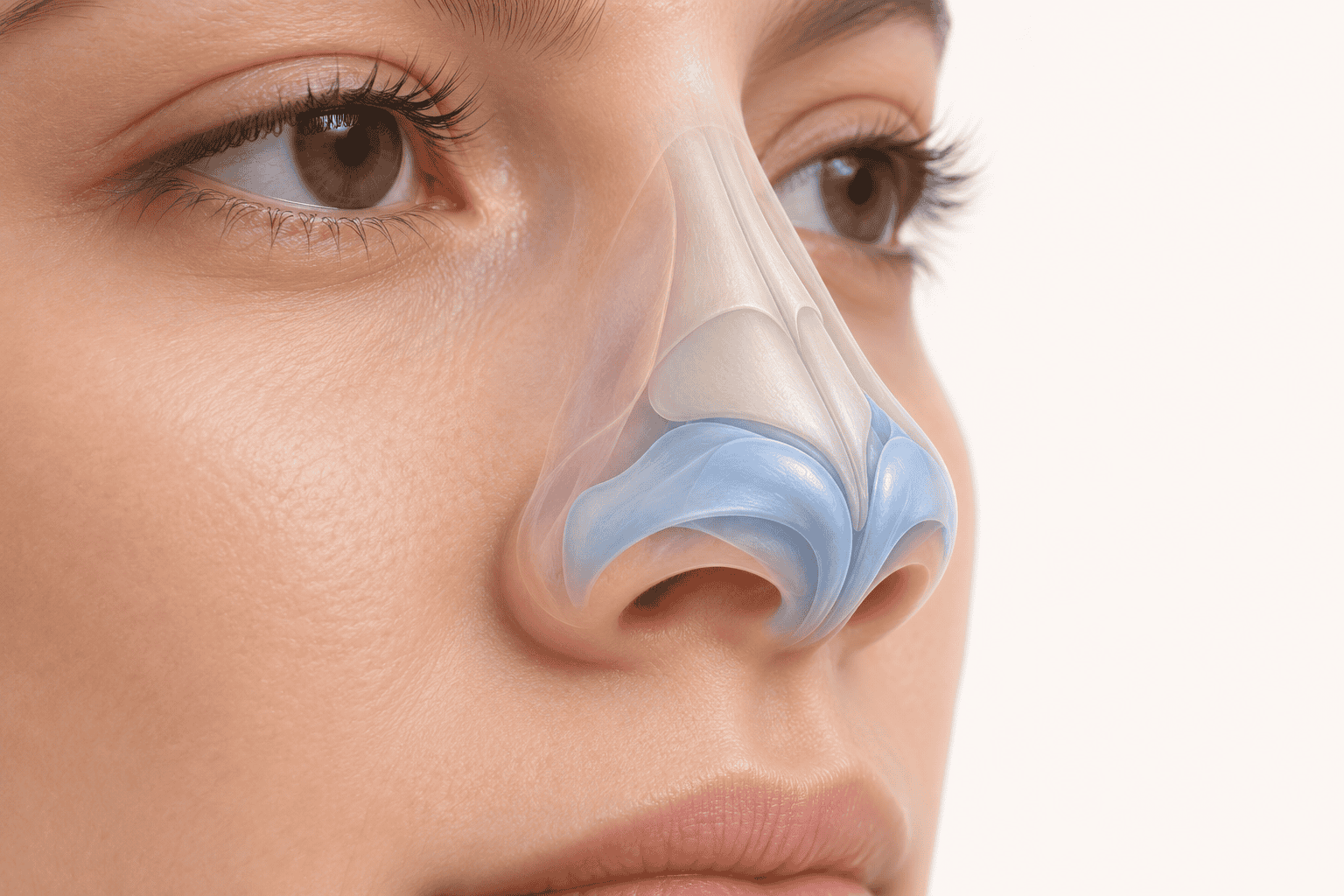
Illustrative anatomy image: nasal-tip cartilage and shape. Educational artwork, not a photograph or an actual surgical result.
Recovery: Why the Tip May Look Rounded at First
The earliest postoperative appearance does not show the final contour. Swelling can be especially noticeable at the nasal tip, and changes may continue gradually as tissues heal.
A photograph taken shortly after splint removal should not be treated as proof of a final result. Our rhinoplasty aftercare article discusses general recovery, while your own surgeon’s instructions should guide activity, wound care and follow-up.
Contact the treating team promptly if you experience increasing severe pain, uncontrolled bleeding, fever or concerning changes in breathing. Do not attempt to judge an unexpected symptom from another patient’s recovery story.
What Results Are Realistic?
A successful plan aims for a nose that looks balanced and functions appropriately, not a universally ideal tip. For a bulbous nose tip, some patients may achieve a visible reduction in roundness, while others will notice a more restrained change because of skin, cartilage or healing differences.
The original asymmetry of the nose and face may remain to some degree. Scarring, persistent swelling, altered sensation, asymmetry, breathing changes and the possibility of revision surgery are among the issues to discuss before consenting.
Patients travelling from Italy should plan follow-up before they travel, including who to contact if healing differs from expectations. Our contact team can help arrange an individual discussion of these questions.
Frequently Asked Questions
Can Rhinoplasty Correct a Bulbous Nose Tip Completely?
Surgery may make a rounded tip more defined, but its achievable shape depends on underlying anatomy and skin. The goal should be a realistic improvement rather than the complete removal of every natural contour.
Is Thick Skin a Reason to Avoid Tip Rhinoplasty?
Not necessarily, although thick skin may limit the visibility of fine structural changes and can make swelling slower to resolve. A surgeon should assess your specific skin and tip support before advising on suitability.
Will Tip Refinement Make My Nostrils Smaller?
Not automatically, because tip shape and nostril width are related but different features. A proposed change to the nostrils requires its own explanation of benefits, limits and potential scars.
Can I Choose a Tip Shape From a Before-and-After Photo?
Photographs can help explain a preference but cannot predict your individual result. Ask which parts of the example are anatomically relevant to your nose and which may not be achievable.
Discuss Your Nasal Tip Goals With Family Beauty
If your concern is a rounded nasal tip, our team can help you understand which features can be assessed and what questions to raise with a surgeon. A personalised consultation is the appropriate place to explore possible refinement, limitations and recovery without promising a particular look.
- Phone: +355 69 606 0620
- Email: info@familybeauty.com
- Location: Rruga Kongresi i Manastirit, Tirana, Albania
- Contact: Speak with Family Beauty