IT
IT  EN
EN  SQ
SQ  ES
ES  FR
FR 
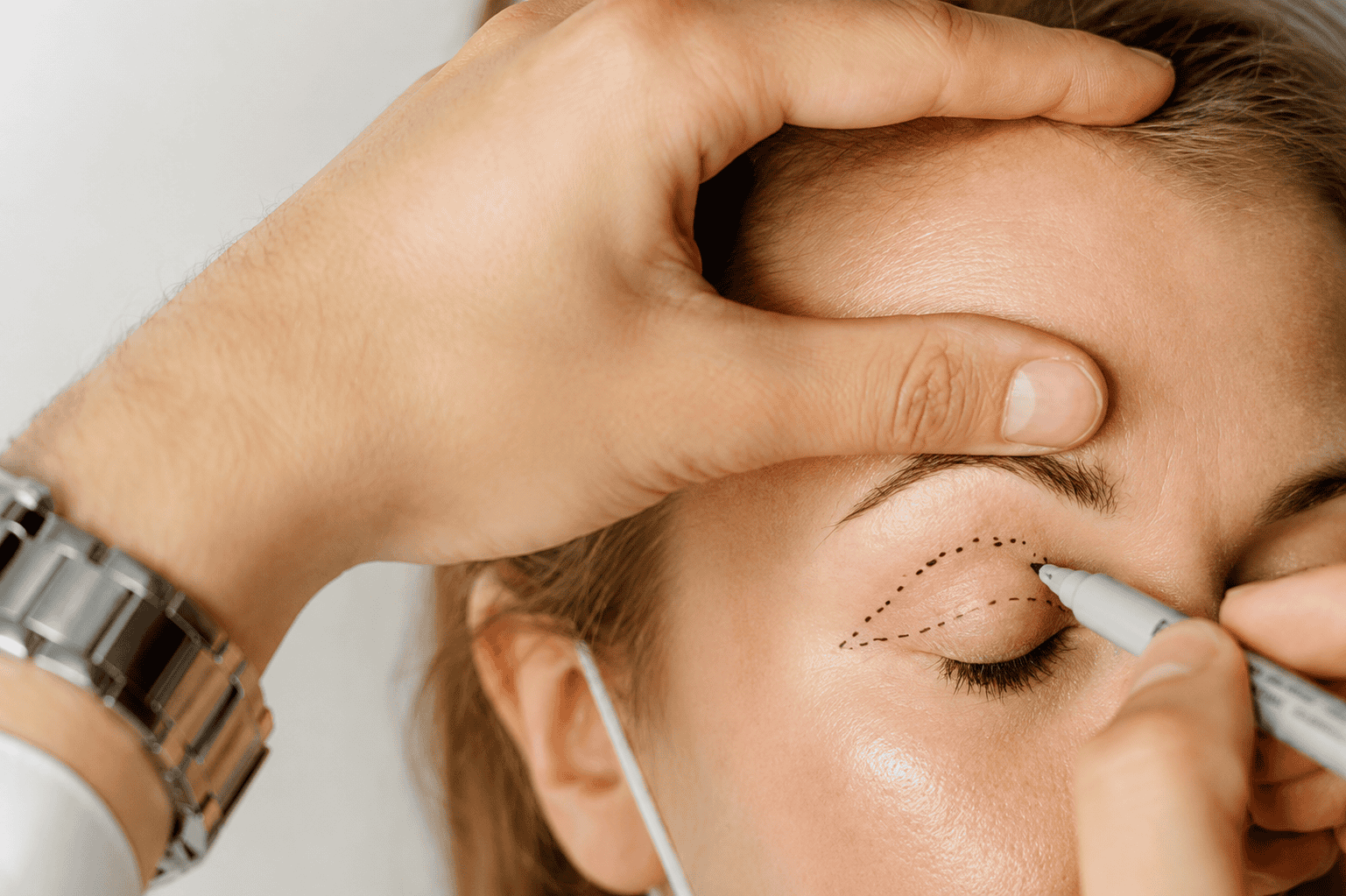
The eye area can make the whole face look tired, even when you feel healthy and well rested. However, not every eyelid concern needs the same operation. Understanding upper vs lower blepharoplasty in Albania helps you know what each procedure can realistically improve.
Upper and Lower Blepharoplasty Treat Different Problems
Blepharoplasty is surgery for the eyelids. It can be performed on the upper eyelids, the lower eyelids, or both.
Upper blepharoplasty mainly treats loose skin and fullness above the eyes. Lower blepharoplasty focuses on bags, puffiness, loose skin, and changes beneath the eyes. The right choice depends on the tissue causing the concern.
| Main concern | Blefaroplastica superiore | Blefaroplastica inferiore |
| Palpebre superiori pesanti | Commonly treated | Not treated |
| Skin folding over the upper crease | Commonly treated | Not treated |
| Under-eye bags | Not treated | Commonly treated |
| Lower eyelid puffiness | Not treated | Commonly treated |
| Loose skin below the eyes | Not treated | May be treated |
| Reduced side vision from excess upper skin | May help in selected cases | Does not help |
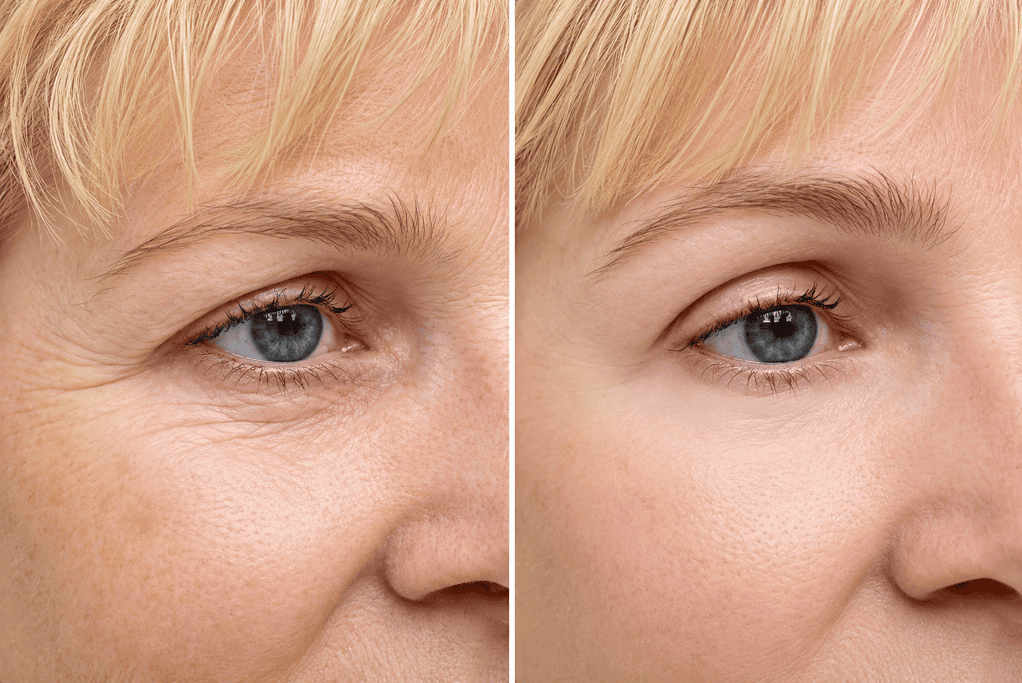
Eyelid surgery may address loose upper skin, eyelid puffiness, under-eye bags, lower-eyelid drooping and excess lower-eyelid skin. A careful examination is therefore more useful than choosing a procedure from photographs alone.
When Is Upper Blepharoplasty the Better Choice?
Upper blepharoplasty may be suitable when the skin above the eye has become loose, folded or heavy. Some people notice that their natural eyelid crease is harder to see. Others find that makeup transfers onto the upper skin.
Common signs include:
- Skin resting close to the eyelashes
- A heavy feeling above the eyes
- Uneven upper-eyelid folds
- A tired or closed expression
- Excess skin that makes the eyes appear smaller
- Tissue that affects side vision in more advanced cases
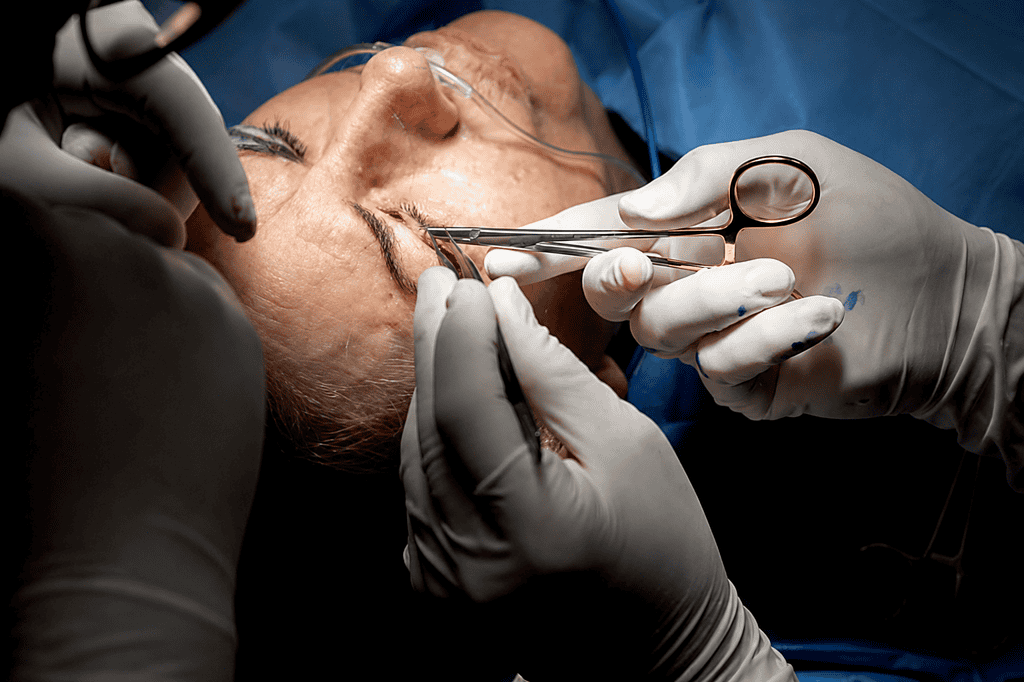
The incision is usually placed within the natural upper-eyelid crease. The surgeon removes only the tissue needed while preserving enough skin for comfortable eyelid closure.
The aim is not to create a surprised expression or change your identity. A careful result should make the eyes look more open while keeping their natural shape.
When Is Lower Blepharoplasty the Better Choice?
Lower blepharoplasty is designed for changes beneath the eyes. The most common concern is a visible bag caused by fat pushing forward. This fullness may remain even after good sleep.
Lower-eyelid surgery may be considered for:
- Permanent under-eye bags
- Puffiness that creates a tired expression
- Loose or finely wrinkled lower-eyelid skin
- An uneven line between the lower eyelid and cheek
- Lower-eyelid tissue that has lost support
- Genetic bags that appear at a younger age
Lower blepharoplasty does not always mean removing all under-eye fat. Removing too much may create a hollow appearance. The surgeon may reduce or reposition fat to create a
smoother transition between the lower eyelid and cheek.
The incision may be placed just below the eyelashes or inside the lower eyelid. The technique depends on whether the concern involves fat, skin, eyelid support or a combination of these factors.
Can You Need Both Procedures?
Yes. Some patients have heavy upper eyelids and lower bags at the same time. Treating only one area may leave the other concern unchanged.
Combined blepharoplasty may be considered when:
- Changes affect both eyelid levels
- The upper eyes look heavy and the lower eyes look puffy
- The patient prefers one recovery period
- Both procedures are medically suitable
- Treating both areas would create better facial balance
However, both procedures should never be automatic. A younger patient with genetic lower bags may need only lower blepharoplasty. Another person may have excess upper skin but a smooth lower eyelid.
Family Beauty offre female blepharoplasty in Albania e male eyelid surgery. The plan should be based on the patient’s anatomy and goals, not on a standard package.
How Does the Surgeon Make the Decision?
The surgeon studies the full eye area because the eyelids, eyebrows, cheeks, skin, fat and muscles work together.
Skin, Fat and Eyebrow Position
Loose skin above the natural crease may point toward upper blepharoplasty. Visible lower bags may point toward lower-eyelid surgery.
The surgeon also checks whether fat should be preserved, reduced or repositioned. Removing tissue is not always the best solution, especially when maintaining natural volume is important.
A low eyebrow can imitate upper-eyelid skin excess. It may continue to create heaviness if it is not identified during planning.
Lower-Eyelid Support
The lower eyelid must sit in a stable position against the eye. Weakness or looseness can affect the technique and whether additional support is needed.
This evaluation is especially important because the lower eyelid is not supported in the same way as the upper eyelid.
Eye and Medical History
Dry eyes, allergies, contact-lens use, previous eye procedures, thyroid conditions, medication and smoking should be discussed. An additional eye examination may be needed in selected cases.
Providing complete medical information helps the surgical team identify factors that could affect healing or comfort after the procedure.
Facial Balance
The amount of tissue removed must suit the individual face. Male eyelid surgery is often planned conservatively to preserve the natural structure of the male eyelid.
Female blepharoplasty should also respect the patient’s original features. The aim is not to create the same eyelid shape for every patient.
Quali risultati ci si può aspettare?
Upper blepharoplasty can make the upper eye look lighter and more visible. Lower blepharoplasty can reduce permanent bags and create a smoother area beneath the eye.
Neither procedure stops the natural aging process. The skin and deeper tissues will continue to change over time, but eyelid surgery can create a long-lasting structural improvement.
The final appearance is not visible immediately. Swelling may temporarily make the eyes look uneven, tight or more closed. The result becomes clearer as the tissues settle during the following weeks and months.
A natural result should not make the face look obviously operated. Other people may simply notice that you look rested, fresher or more alert.
Recovery After Upper or Lower Blepharoplasty
Both procedures can cause swelling, bruising, irritation, temporary dryness and mild discomfort. Cold compresses, prescribed eye care, rest and sun protection may form part of the recovery instructions.
Upper blepharoplasty often has a simpler early recovery because the treatment is mainly within the upper crease. Lower surgery may involve deeper fat repositioning or eyelid support, so swelling can remain visible for longer.
| Recovery stage | What you may notice |
| First few days | Swelling, bruising, tightness and watery or dry eyes |
| End of the first week | Swelling begins to reduce and a follow-up may be planned |
| Around 10–14 days | Many patients feel more comfortable in public |
| Following weeks | Bruising fades and incision lines begin to soften |
| Following months | Final definition becomes clearer |
Recovery varies between patients. Your surgeon’s instructions should always be followed instead of using another patient’s experience as a guarantee. The American Society of Plastic Surgeons also recommends careful sun protection while the eyelids are healing.
Who May Be a Suitable Candidate?
A suitable candidate is generally healthy, understands the procedure and has realistic expectations. Smoking, uncontrolled health conditions, serious eye disease or medicines that increase bleeding may affect whether surgery is appropriate.
Medical tests or medication adjustments may be needed before surgery. Never stop prescribed medicine without instructions from the relevant doctor.
It is also helpful to explain your goal clearly. The surgeon must determine whether the concern comes from the upper eyelid, lower eyelid, eyebrow or cheek.
Healthy patients without serious eye conditions and with realistic goals are generally considered better candidates for eyelid surgery.
Upper or Lower Blepharoplasty: The Final Choice
The simplest guide is:
- Heavy skin above the eyes usually points toward upper blepharoplasty.
- Permanent bags below the eyes usually point toward lower blepharoplasty.
- Concerns in both areas may require a combined procedure.
- A low eyelid margin may be ptosis rather than excess skin.
- A low eyebrow may contribute to upper-eyelid heaviness.
- Dark pigmentation alone may not improve with blepharoplasty.
The most important step is not choosing the operation yourself. It is receiving an assessment that explains the cause of the concern and what surgery can realistically improve.
Request Your Personalized Consultation👁️✨
Not sure whether you need upper, lower or combined blepharoplasty? Contact Family Beauty for a personalized consultation and a treatment plan based on your eyelid anatomy.
📲 Scrivici su WhatsApp o chiamaci: +355 69 606 0620
📧 E-mail: info@familybeauty.com
📍 Indirizzo: Rruga “Kongresi i Manastirit”, Tirana, Albania
Plan your blepharoplasty in Albania with clear information, realistic expectations and support before and after surgery. ✈️💙